The Anatomy of Real
Eighteen months of AI filmmaking, no client, no brief. The mistake I made in the first one is the mistake I'm currently standing inside on the fourth.
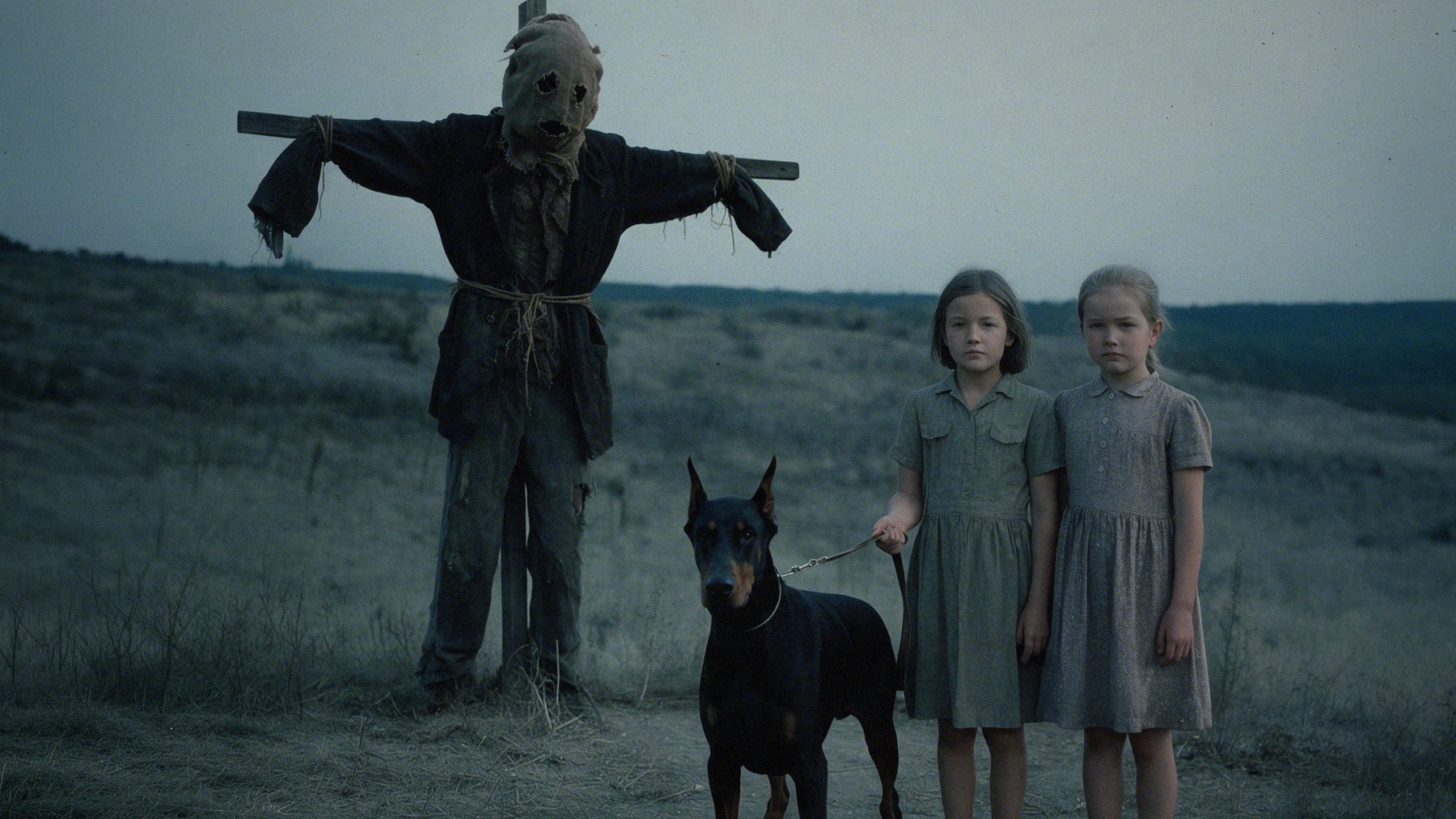
The Haunted, the most consistent of the four, for reasons that weren't skill.
The scene I cut
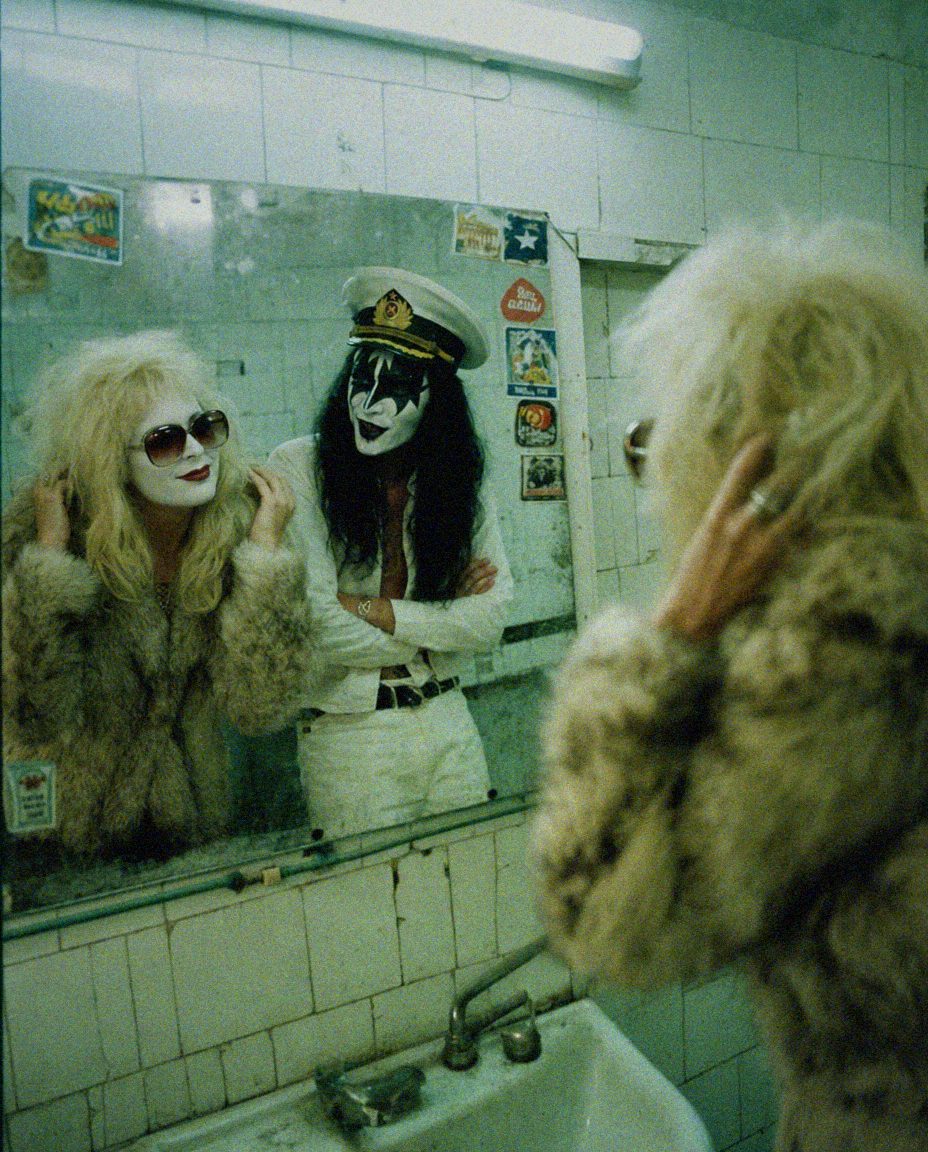
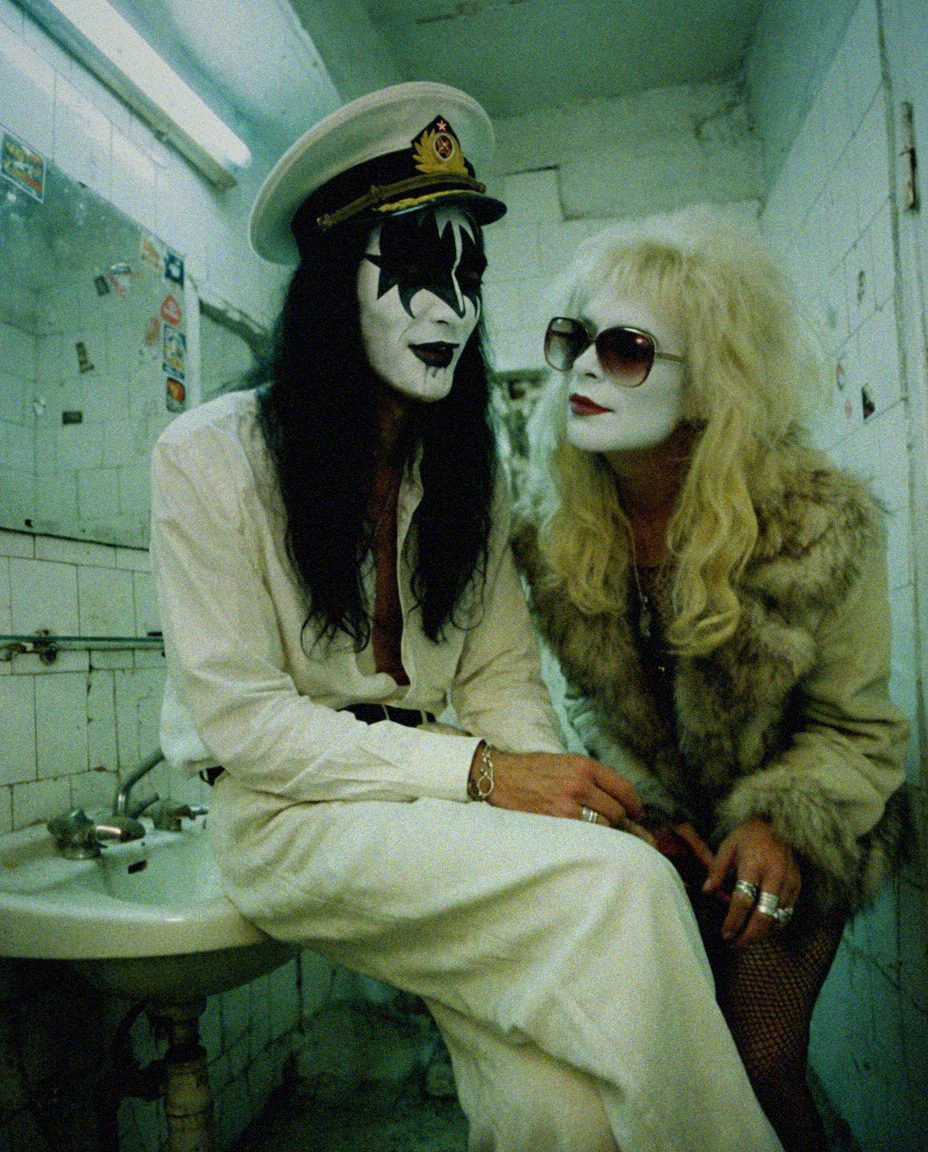
01 · Eastern Bloc PartyEastern Bloc Party has a bathroom in it that nobody has seen. Anyone who's been to a late, sweaty party knows the moment: you step into another room and two people are deep in some life-affirming conversation. It's jarring, and most people Homer Simpson their way back out, but it's also the most human thing that happens all night. In my version, two people in face makeup sit on the edge of a sink under a fluorescent tube, a naval cap, a fur coat, black greasepaint running down his chin because the night has gone long. They're talking. It's the only quiet moment in the film and the only scene that says what the film is about.
Eastern Bloc Party has a bathroom in it that nobody has seen. Anyone who's been to a late, sweaty party knows the moment: you step into another room and two people are deep in some life-affirming conversation. It's jarring, and most people Homer Simpson their way back out, but it's also the most human thing that happens all night. In my version, two people in face makeup sit on the edge of a sink under a fluorescent tube, a naval cap, a fur coat, black greasepaint running down his chin because the night has gone long. They're talking. It's the only quiet moment in the film and the only scene that says what the film is about.
I cut it because it wouldn't sit with the grade.
Every other frame in that film is night, with some combination of sodium, club red, hard direct flash. The bathroom is lit by a green-white fluorescent, the one cold institutional source in the whole piece, and the edit was coming together, and I made the call that one scene wasn't worth risking the film for. I told myself I'd take it as a learning and apply it next time. It sat in a folder for a year and then showed up again on the fourth film, where I can't cut around it, because this time it's half the movie.
What that film was supposed to be
02 · Intent vs. legibilityEastern Bloc Party was about the suppression of personal freedom, told through flashy party and hip-hop iconography. Two acts. In the first, people in a failed state are covering their identity, moving toward somewhere unnamed. A woman in a balaclava, a rider on a Japanese hyperbike, an old man's tattooed hands counting hundreds under an iced-out Patek. Hints of what's coming, all of it concealed.
Then we get inside, and the mask comes off. Same iconography, flipped. Orthodox prison tattoos on a woman in a plunging dress. A gold grill stamped ПРАВДА (Russian for Truth). The woman from the opening, balaclava gone, spraying the water gun over the crowd.
She was inspired by Anastasia Ivleeva, whose "almost naked" party at a Moscow club in December 2023 became a national scandal, and who was later fined over two 2022 social media posts calling for peace, under a law passed days after the posts were made. The bathroom couple were a nod to Sado Opera, the queer performance collective who left Russia and work out of Berlin (their singles "Bathroom Song" and "KISSing the gay guy" might be a bit too on the nose visually).
Months later I went back to the complete shot list and read it the way a stranger would, with the intent deliberately set aside. None of it came through. No two-act structure, no recurring character, no political referent. Archetypes and a mood.
That reading was right. I'd cut the scene that carried the concept and left the eye candy to do a job it can't do alone. That's a directing problem, and it's the one nobody in this medium is talking about, because everyone's shipping the hero frame and letting the caption explain the idea.
The grill reads ПРАВДА correctly. The gas station sign in the same film isn't a word. I spent the effort where a viewer would linger and not where they wouldn't, which is a defensible call right up until someone who reads Cyrillic watches it.
The Haunted, and the thing that looked like growth
03 · Film twoThe second film is a rural gothic. A veiled figure in a field, an old man with a scythe between two grain silos, a kid running a corn maze, a doberman mid-bark, a burning barn, an empty veil hanging in the sky at the end.
It's the most consistent of the four. One palette holds every frame: pink dusk sky against cool grey-green field, warm rust against blue steel. The two-temperature discipline I'd been circling in the first film runs through all of it.
I read that as progress for a while, and some of it was. The rest of it was that everything in the film happens in one place, at one time of day, in one weather condition. Overcast twilight is the forgiving condition; no hard shadows, no specular problems, nothing in the contrast range to manage. Consistency is easier when there's only one thing to be consistent with. That film never asked me to solve the transition problem, so I didn't, and I read the absence of the problem as competence.
Learning what a shot is for
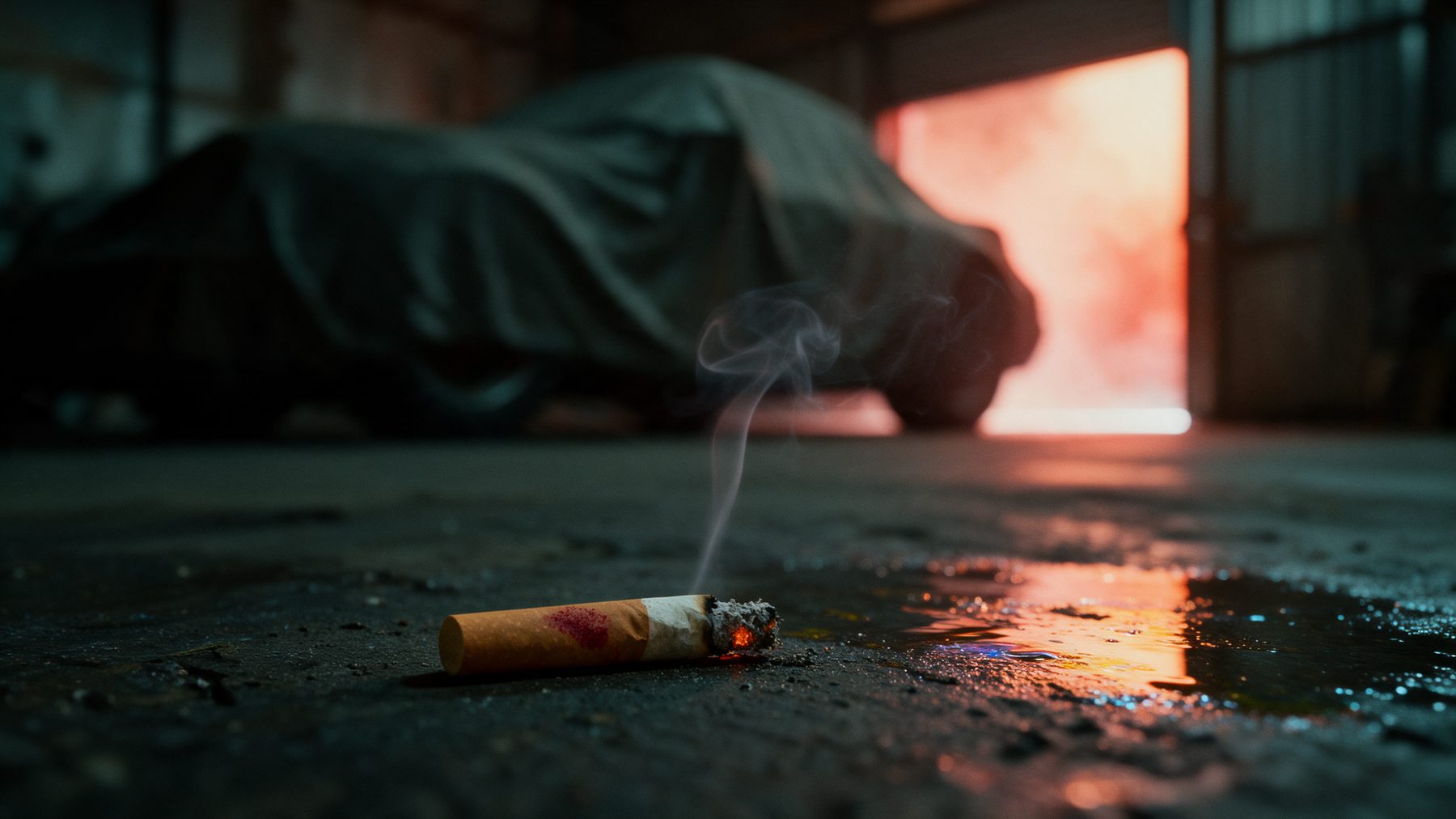
04 · The Last Beautiful MachineThe third one is where I started generating shots that only make sense in an edit. Wide of a brutalist tower with a figure at its base. A woman on a balcony smoking over a flooded ruin. A finger on a rusted keypad. A blade of orange light through a corrugated door. A cigarette burning on wet ground with a covered car soft and out of focus behind it.
That cigarette shot is the one I'd point at. The hero of the film is a silver 930, and I put it out of focus in the background of its own reveal. Inserts don't exist to be beautiful. They exist because a cut needs them, and until that film I'd been making images and calling them coverage.
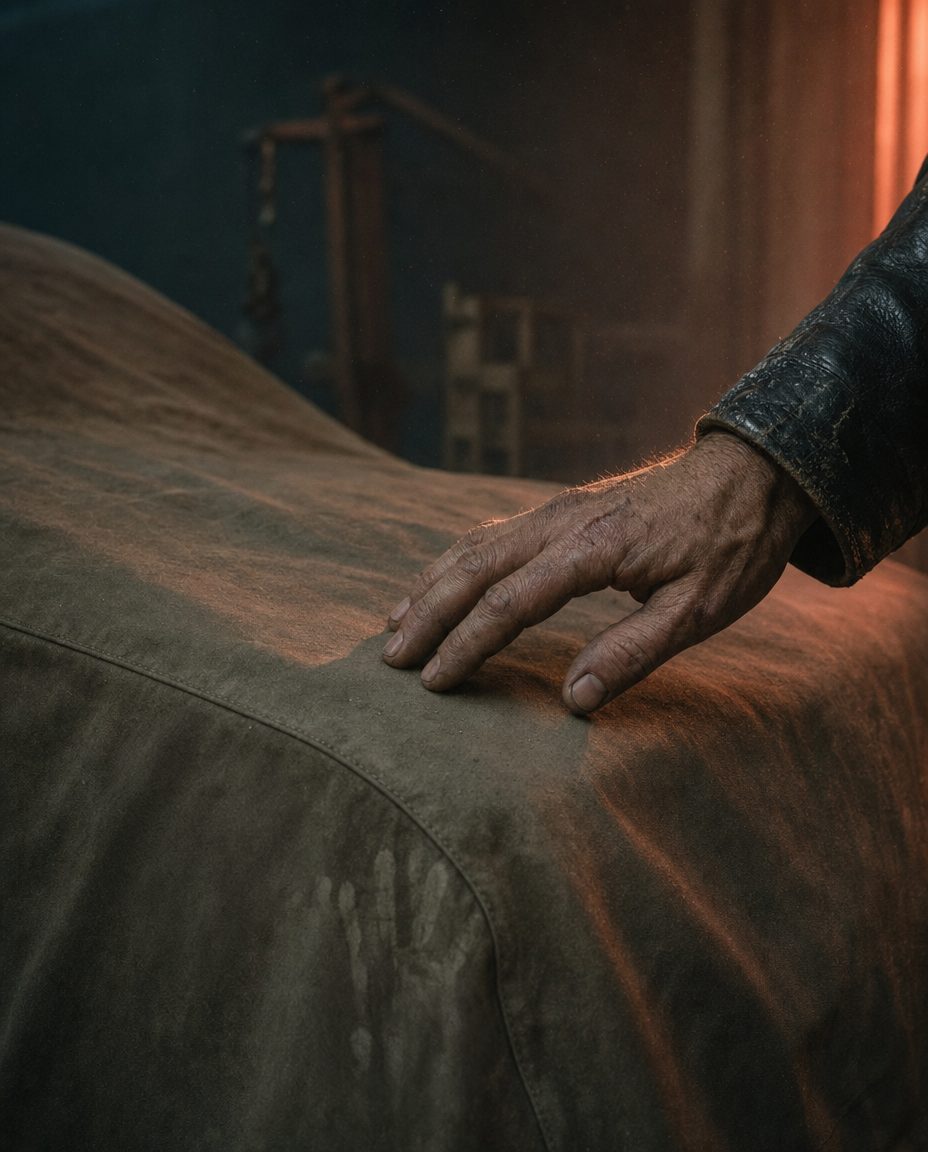
It's also where the character became hands. We never see a face, just a silhouette in a long coat, and then hands. On a keypad. On dust-covered canvas with old palm prints already in the dust. On a gauge. Aged, veined, consistent across three separate generations.
The Arctic, and the debt coming due
05 · Film four, in progressThe fourth film started at night and didn't work. Nothing was happening in it. I liked the environment, the theme and the technical challenge enough to keep going, so I moved it to daylight and rebuilt.
That rescue is where it went wrong, and it took me until now to see how. When you're saving a project you optimize for the thing you're saving. I saved theme, environment and challenge. Narrative wasn't in the rescue brief, so it never got re-examined, and I skipped the pre-production pass that would have caught it because I was doing fixing instead of building. Salvage isn't the same operation as development. It doesn't run the same checks.
What I've got is an explorer arriving by helicopter, rappelling into an ice cave, walking a tunnel, crossing a cracked lake, reaching an outpost. Then the back half turns: hands on a frozen hatch, a control room, green code in her goggles, red vectors, frostbitten fingers on a keyboard, and a close on her eyes welling up.
The back half is the best work I've done. The front half is a walking simulator.
There's no tension in it, nothing withheld, nothing to be afraid of. She's not going toward anything. She's literally arriving, descending, traversing. Which is why the wides read as adventure photography no matter how good they look, and why the final shot is carrying emotional weight the opening never earned. That last frame was the hardest thing in the film to nail. Of course it was. It's a payoff with no setup.
I spent a while thinking the problem was two visual registers that wouldn't cohere. Regrading it would just produce a consistent walking simulator.
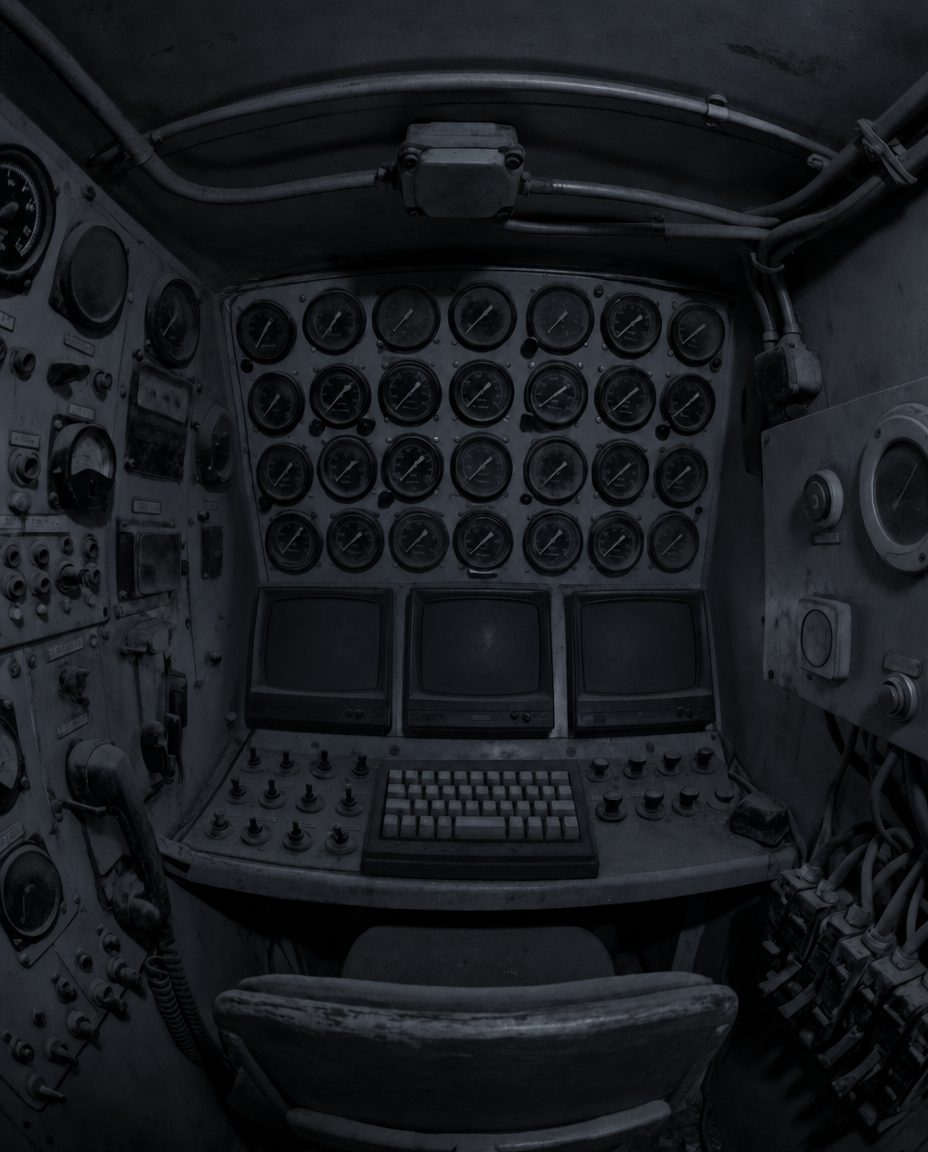
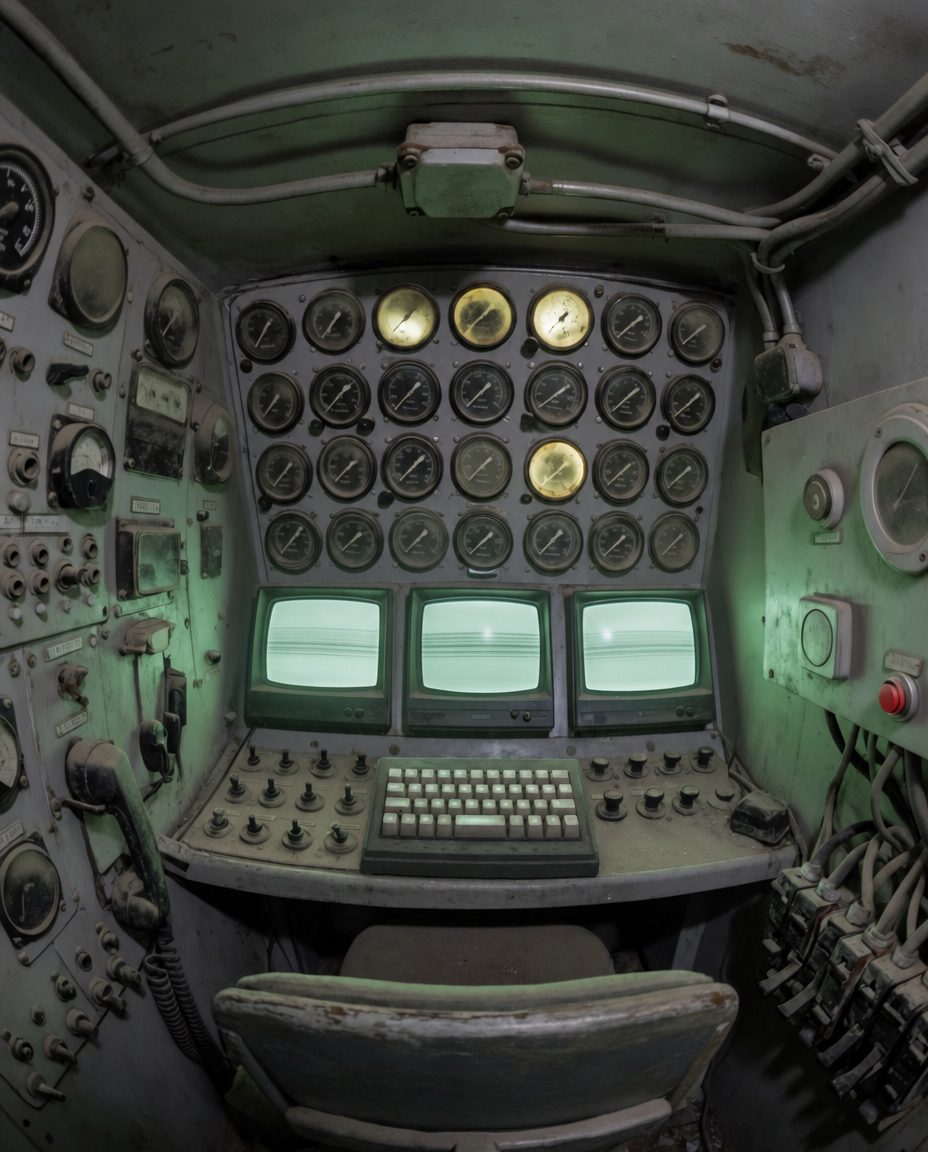
Built four times. Twice to get it, twice more because the keyboard was missing from the wide.
What the doctrine covers, and what it doesn't
06 · MethodOver four films I've written down a working set of rules. Platform routing: organic and textural to one engine, rigid and mechanical to another, graphic and plan-view to a third, motion to a fourth. Two-temperature colour. Deny geometrically rather than instructionally. A beat isn't banked until the prompt is on disk.
Chained reference
The Arctic lead was originally a man. I changed it mid-production, locked the best look, referenced it into the next shot, then referenced both into the one after, compounding. That's how one identity holds across sixteen frames and lighting states from full daylight to a single red source in the dark.
Candidate selection
Somewhere in the third film my filenames started carrying a "-winner" suffix. Same beat on multiple engines with small prompt variations, and with that many versions in play I needed to see at a glance which one was going to motion. The convention showed up because I got lost.
Sets, not shots
The Arctic control room exists twice. Unlit and lit, same geometry, same chair. Continuity, in a medium where nobody thinks it applies.
The doctrine covers colour, platform, prompt discipline and asset hygiene. It says nothing about tonal transition between scenes, and nothing about dramatic pressure. Those are exactly the two places all four films have broken.
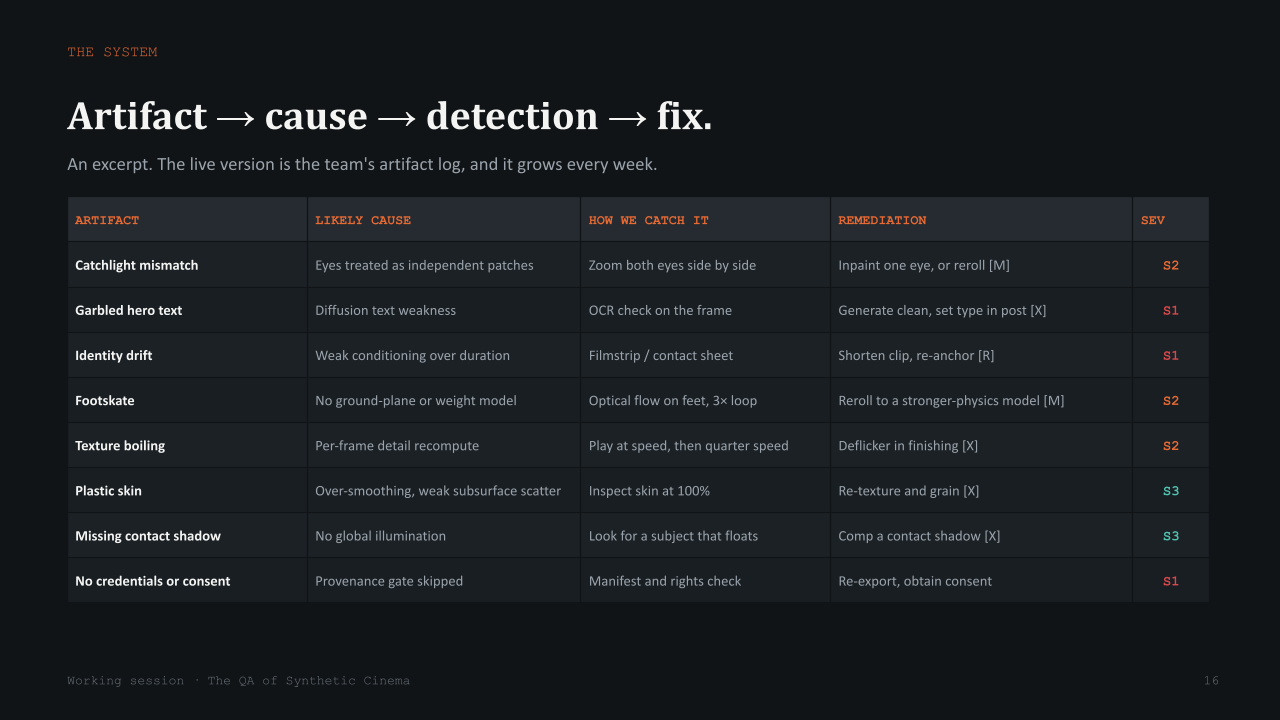
From SIGNAL, a production QA system for generative image and video.
The craft has moved faster than the discipline. Four films in, the images are a tier better than where I started and the pre-production is roughly where it was. Every failure in this piece is upstream of the tools.
I don't have the answer to the Arctic yet. The material is probably already in the shot list. Something transmitting, somebody who built that control room and left, seeded before she arrives instead of discovered after. Same locations, same coverage, different order. But I haven't solved it, and I'm not going to pretend otherwise to give this a clean ending.
Anyone can get a good frame now. The frames are cheap. What's scarce is knowing why the ones that fail, fail. And I only know that because I've made four of these and gone back to look.